

Summary: Ayurveda connects uterine prolapse with imbalances in Vata, Pitta, Kapha, and Apana Vata. Understanding these concepts may support awareness, while medical evaluation remains essential for appropriate treatment.
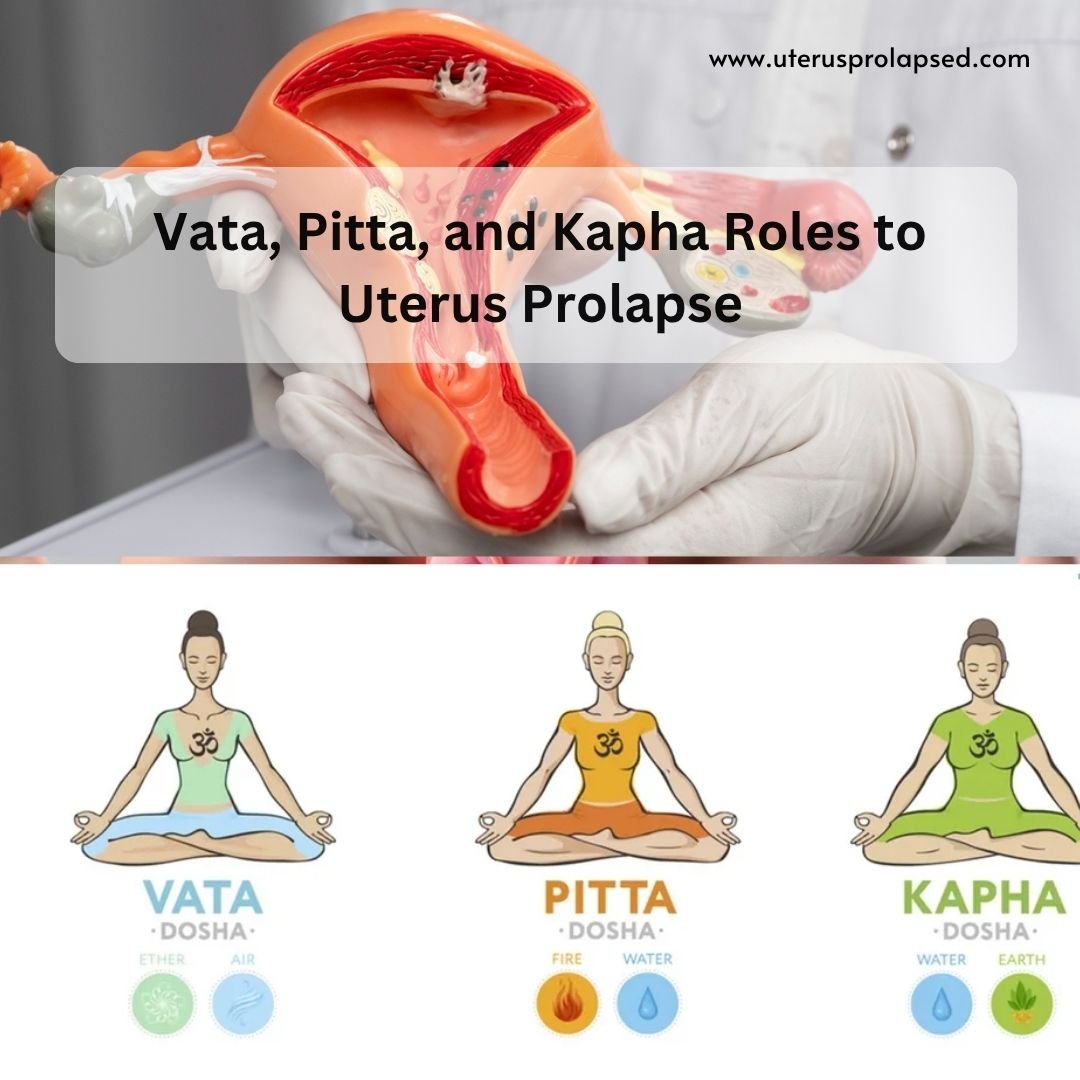
It is embarrassing, concerning, and hard to talk about uterus prolapse. In Ayurveda, this problem is assessed based on the following three doshas: Vata, Pitta, and Kapha. Knowledge about their functions in Ayurveda will help to understand symptoms and choose the right care.
How Vata, Pitta, and Kapha May Relate to Uterine Prolapse
For proper pelvic health in Ayurveda, there is a need for balance. The following three doshas play different roles in influencing body functions:
- Vata: Related to movement and dryness. Imbalance is believed to lead to weakness, pain in the pelvic area, constipation, and a feeling of downward pressure.
- Pitta: Relates to heat and metabolism. Imbalance is known to lead to burning sensations, irritation, inflammation or discomfort in the pelvic area.
- Kapha: Associated with structure, stability, and lubrication. Imbalance in this dosha may cause a sense of heaviness, congestion, or bloating.
- Apana Vata: This is a form of Vata related to downward-moving actions such as digestion and sexual activity. It is considered necessary in Ayurvedic practice for pelvic health.
In A Nutshell
Knowledge of Vata, Pitta, and Kapha can provide the Ayurvedic viewpoint for uterine prolapse and pelvic pain. However, uterus prolapse is a medical issue that requires a professional diagnosis. In case you experience any discomfort related to your pelvis or vagina, please contact an experienced Ayurvedic practitioner at Kalptaru Herbal Therapy Centre.
FAQs
Q1. How does Ayurveda explain uterine prolapse?
Ans: Ayurveda considers the health of the pelvic region in terms of the balance between Vata, Pitta, and Kapha. Of the three, balanced Apana Vata has been identified by Ayurveda as maintaining proper downward flow and pelvic function.
Q2. What role does Vata play in uterine prolapse?
Ans: The imbalance of Vata is considered in Ayurveda to be linked with problems like dryness, movement, pelvic pain, constipation, weakness, and a sensation of pressure.
Q3. Can Pitta imbalance affect uterine prolapse symptoms?
Ans: The aggravated Pitta has been associated with heat, irritability, burning sensation, and inflammation in Ayurveda. It should be noted that the above problems might be attributed to something else as well.
Q4. What is Apana Vata?
Ans: The term ‘Apana Vata’ means the function that moves down. Some examples include the elimination function and reproductive functions. Ayurveda believes in the need to maintain its balance to support pelvic health.
Q5. Is uterine prolapse preventable?
Ans: While not all conditions can be prevented, maintaining pelvic floor health, avoiding straining, managing constipation, and treating symptoms could decrease the risk.