


Summary: Uterine prolapse can be treated with non-surgical or surgical methods. Non-surgical options like exercises, lifestyle changes, pessary use, and Ayurveda may help mild cases, while surgery is usually considered for severe prolapse conditions.
Do you always get confused which treatment will be effective for uterine prolapse? Uterine prolapse is a condition where the uterus slips down into or protrudes out of the vagina. It can affect your daily lifestyle by creating discomfort, difficulty with bowel syndrome, pain or discomfort during sexual intercourse, and heaviness in the pelvis.
But how do you choose whether it is non-surgical or surgical treatment will be beneficial? Let’s clear your thoughts.
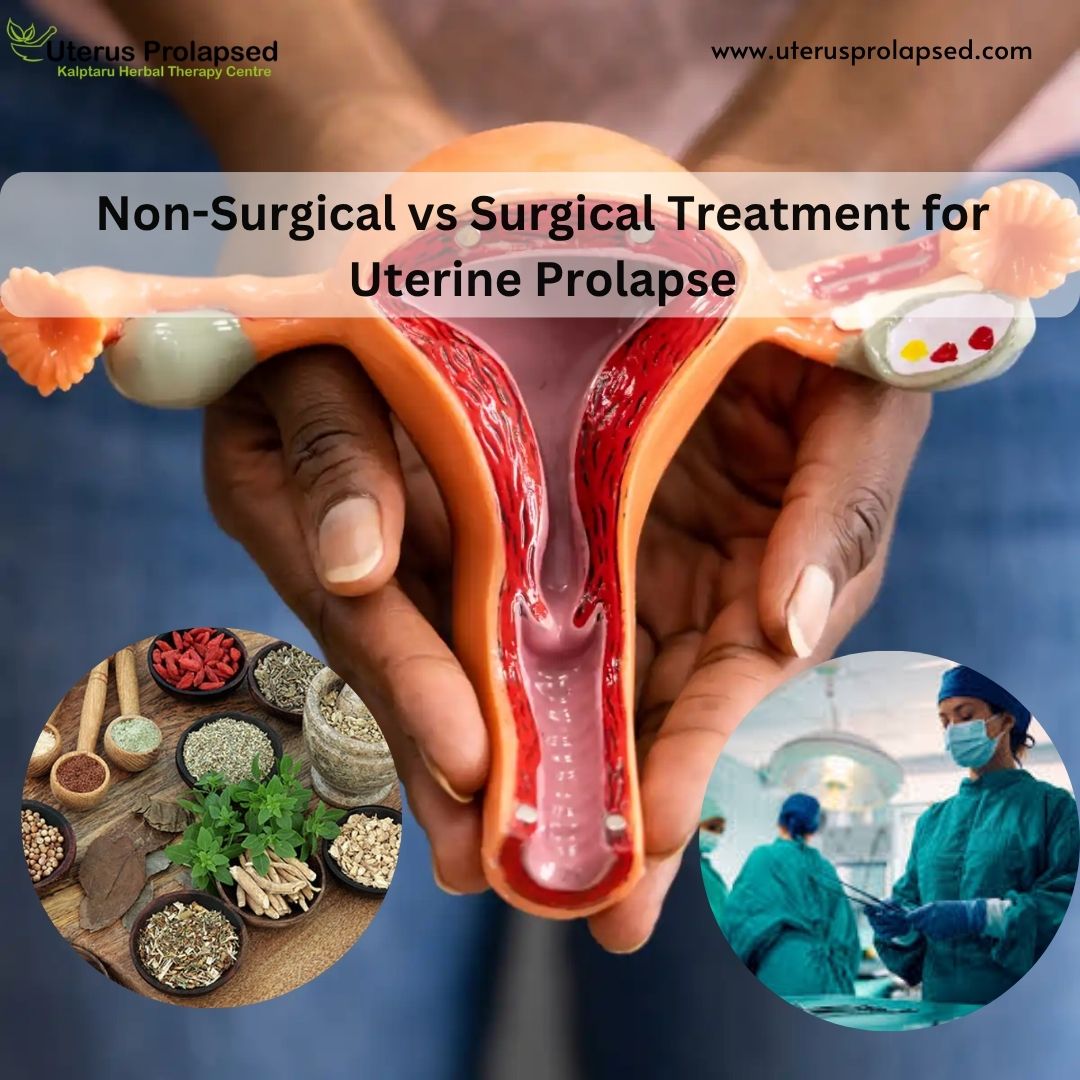
Deep Analyses About Non-Surgical and Surgical Treatment
| Features | Non-Surgical Treatment | Surgical Treatment |
| Suitable For | All types of uterine prolapse | Severe uterine prolapse |
| Treatment Type | Natural and conservative approach | Medical operation procedure |
| Common Methods | Pelvic exercises, lifestyle changes, and Ayurveda medicines | Uterus repair surgery or hysterectomy |
| Hospital Stay | Not required | Always required |
| Recovery Time | May have slow recovery period | Recovery may take several weeks |
| Pain Level | No pain | Pain and discomfort after surgery |
| Cost | Lower cost | Generally higher cost |
| Risk Factors | No side effects or risk factors with no chance of recurrence | Risk of infection, bleeding, or recurrence (if you choose hysteropexy surgery) and bladder prolapse (in hysterectomy surgery) |
| Daily Activities | Can continue normal routine | Temporary or permanent activity restrictions |
| Long-Term Management | Regular care and follow-up needed | Follow-up after surgery needed |
| Natural Option | Ayurveda and exercises available | No natural treatment involved |
| Patient Preference | Preferred by people wanting non-invasive care | Preferred when prolapse is severe |
Bring It All Together
Both non-surgical and surgical treatment can help to treat uterine prolapse. But non-surgical treatments are more effective than surgical ones. It uses natural herbs and promises 100% permanent cure without any side effects.
While on the other side, hysteropexy surgery can cause recurrence and bladder prolapse in hysterectomy surgery. For the best Ayurvedic treatment, contact Kalptaru Herbal Therapy Centre.
Questions That Are Frequently Asked
Contents
Q1. Can uterine prolapse be treated without surgery?
Ans: Yes, All types can be cured with exercises, lifestyle changes, and Ayurvedic medicines.
Q2. Are surgeries for uterine prolapse safe?
Ans: No, all procedures come with complications including infections, blood loss, recurrence, and recovery pain.
Q3. Do pelvic floor exercises help in treating prolapse?
Ans: Yes, regular pelvic floor exercises can help to increase muscle strength and help alleviate symptoms in many patients.
Q4. What are the early signs of uterine prolapse?
Ans: Signs of uterine prolapse include feeling heavy, pressure in the pelvic region, lower back pain, and urinary troubles.
Q5. Can uterine prolapse resolve on its own?
Ans: No, uterine prolapse does not get cured itself but with Ayurvedic treatment, symptoms can be cured from the roots.